RisingStar
- Home
- About Us
- Products
- News
- Video
- Contact
- Send Inquiry
Search
- Home
- About Us
- Products
- News
- Video
- Contact
- Send Inquiry
RisingStar
When discussing display technologies, the terms "LCD" and "IPS" are often used interchangeably—but this is a common misconception. While all IPS panels are a type of LCD (Liquid Crystal Display), not all LCDs are IPS. This distinction is crucial for engineers, designers, and end-users who demand clarity on performance, visibility, and application suitability—especially in high-brightness sunlight-readable environments such as military equipment, outdoor kiosks, and industrial control systems.
LCD (Liquid Crystal Display) is a broad category of flat-panel displays that use liquid crystals to modulate light. These crystals do not emit light themselves but instead manipulate polarized light from a backlight to produce images. The earliest LCDs were based on Twisted Nematic (TN) technology, which offered fast response times but poor viewing angles and color accuracy—unsuitable for demanding applications.
IPS (In-Plane Switching), introduced by Hitachi in 1996 and later refined by companies like LG Display and Samsung, is a specific type of LCD technology designed to overcome TN limitations. In an IPS panel, liquid crystal molecules align parallel to the glass substrate and switch within the plane of the panel rather than twisting vertically. This structural difference allows for significantly wider viewing angles (up to 178°), better color reproduction, and more accurate grayscale transitions—making it ideal for professional design, medical imaging, and outdoor sunlight-readable displays.
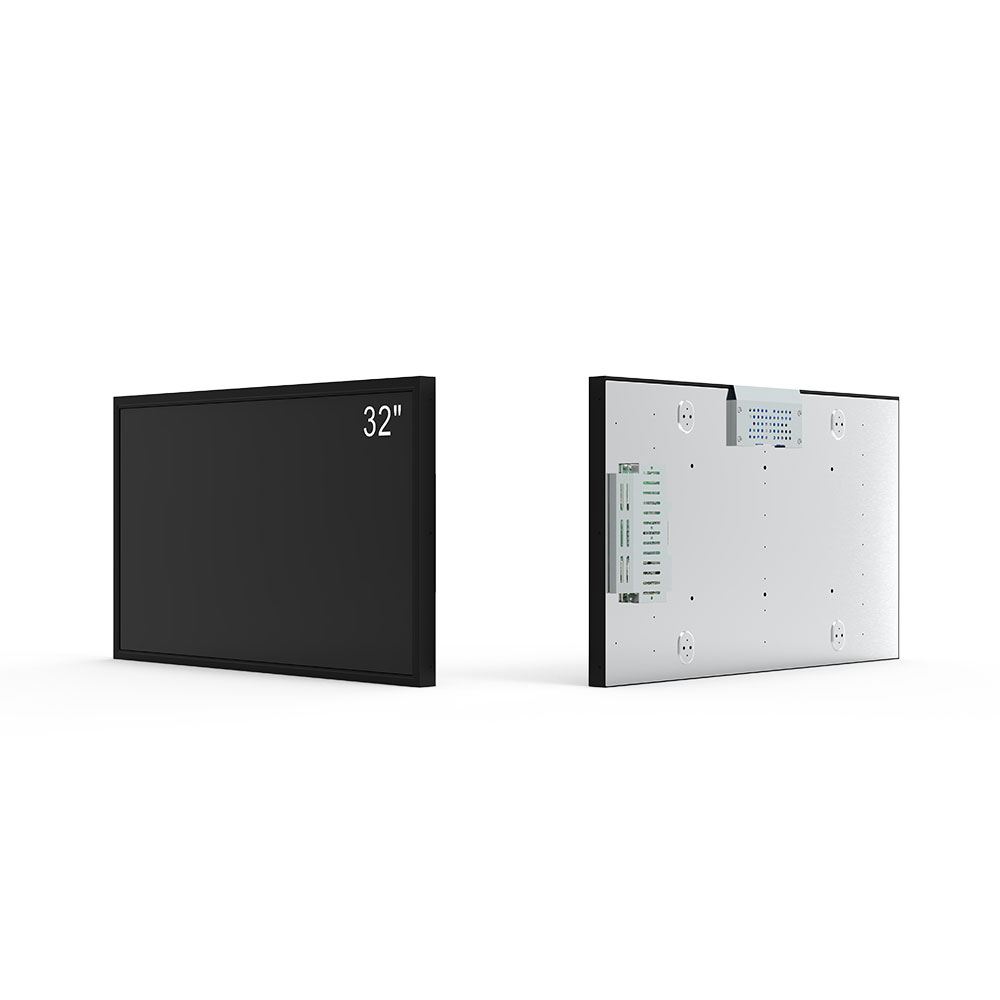
A key advantage of IPS over traditional TN-based LCDs is its superior color consistency across viewing angles. For example, in a solar-powered outdoor monitor used by utility workers or emergency responders, maintaining image clarity under direct sunlight requires both high brightness (typically >5000 nits for true sunlight readability) and stable color performance regardless of the user’s angle. Here, IPS outperforms TN LCDs by minimizing color shift and contrast loss when viewed off-axis—a critical factor in real-world usability.
Moreover, modern IPS panels now support ultra-high brightness levels through advanced backlighting (e.g., LED with local dimming or quantum dot enhancement) and anti-reflective coatings, making them suitable for applications where ambient light conditions vary dramatically—from indoor offices to desert field operations. Case studies from the U.S. Department of Defense show that IPS-based displays deployed in armored vehicles maintain operational clarity even at noon sun exposure, whereas TN-based alternatives fail to meet MIL-STD-810G requirements for environmental durability.
It's also important to note that while IPS offers better visual quality, it historically had slower response times compared to TN. However, advancements such as Fast IPS (F-IPS) and AHVA (Advanced High-Viscosity VA) have narrowed this gap, with response times now reaching 4ms or lower—making IPS viable for gaming and dynamic video content too.
In summary, although all IPS displays are LCDs, the reverse is not true. Choosing between LCD types depends on application-specific needs: TN for cost-sensitive, fast-response uses; IPS for accuracy, wide viewing angles, and reliability in challenging lighting conditions. For engineers designing sunlight-readable systems, IPS remains the gold standard due to its combination of optical performance, durability, and compatibility with modern backlighting and anti-glare technologies. As global markets demand more robust and versatile displays—particularly in automotive, aerospace, and smart city sectors—the evolution of IPS continues to drive innovation beyond mere pixel density into intelligent brightness management and adaptive color calibration.